Protocols 5 min read
IEC 60870-5-104 and DNP3: remote monitoring in power systems
The two most common protocols between RTUs and the control center in power and water systems: data models, events and time stamps, security, and what decides the choice.
Published:
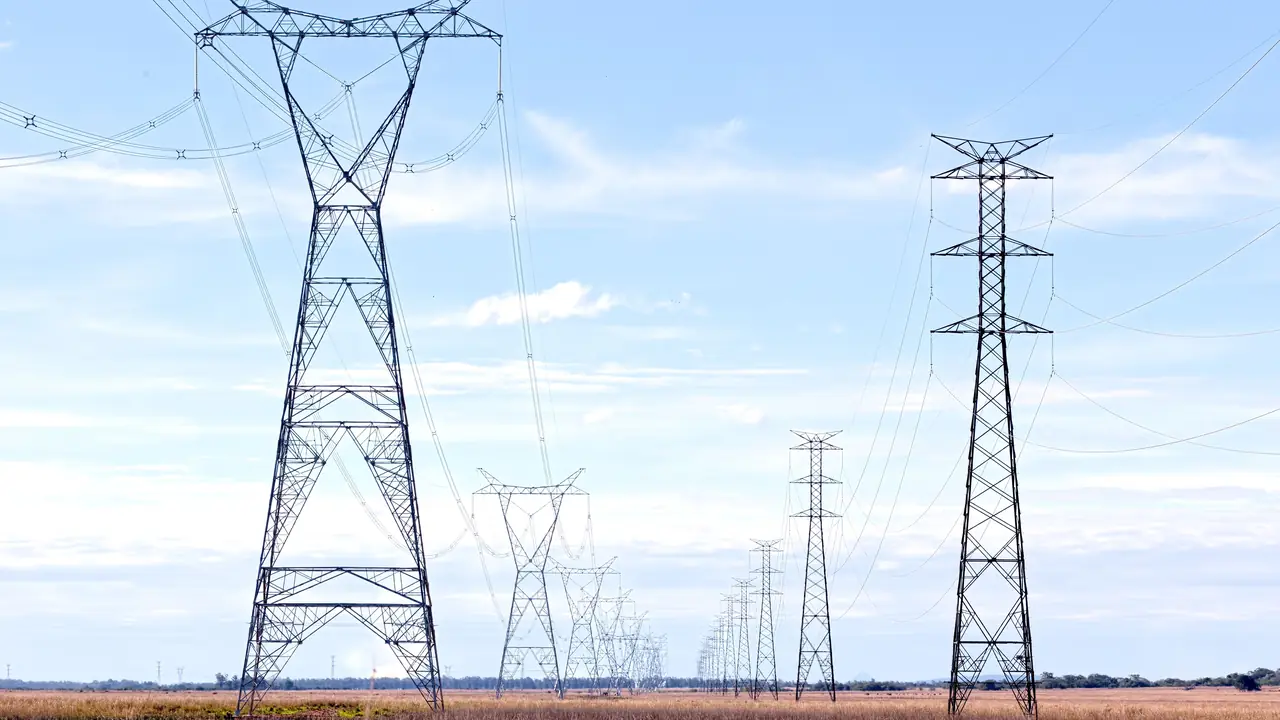
The control center of a power distribution company works with data from RTUs (remote terminal units) and protection relays in substations across its network. Two protocols dominate this link between the center and the field: IEC 60870-5-104 and DNP3. Both grew out of the same need: to monitor and control equipment spread over a wide area, reliably, over links with limited bandwidth.
A short history
IEC 60870-5 is the International Electrotechnical Commission’s family of telecontrol protocols. IEC 60870-5-101 is the member that runs over serial lines. IEC 60870-5-104, which carries the same application layer over TCP/IP networks, was published in 2000 and became the common language of power grids in many regions, Europe above all.
DNP3 (Distributed Network Protocol) was developed in North America in the early 1990s and became the IEEE 1815 standard in 2010. Besides power distribution, it is widely used in water and wastewater systems. It runs over serial lines, TCP and UDP.
Data model
In IEC 104, every piece of data travels inside an ASDU (application service data unit). The ASDU type says what the data is: a single or double point status, a measured value, a counter or a command. Each information object has an address (IOA), and the message carries its cause of transmission as well, such as a spontaneous change, an answer to an interrogation or a periodic update.
DNP3 describes data with object groups and variations: binary inputs, analog inputs, counters, binary and analog outputs. Different forms of the same data, for example with or without a time stamp, or 16 or 32 bits wide, are chosen by variation. DNP3 also keeps current values (static data) apart from records of change (events).
Events and time stamps
Both protocols share the same basic idea: do not keep sending data that has not changed; report the change.
In IEC 104, the controlled station (the RTU) sends a value on its own when it changes. When the connection is set up, or whenever it needs to, the center asks for the current state of everything with a general interrogation. Events can carry a seven-byte time tag with millisecond resolution (CP56Time2a).
In DNP3, the field device sorts events into three classes and buffers them. The master collects them with class polls; where it is allowed, the device can also send events unsolicited. If the connection drops, the buffered events are collected in order once it returns, which helps keep the sequence of events intact on unreliable links. A poll that asks for all static data at once is called an integrity poll.
Commands
Both protocols define select-before-operate for control: the center first selects the command, the field device confirms the selection, and then the command is executed. It is widely used to reduce the risk of operating the wrong object. Both protocols also allow direct operation.
Security
IEC 104 reflects the assumptions of its time and defines no authentication or encryption of its own. The IEC 62351 family of standards adds TLS and authentication methods to fill that gap; how far they can be used in the field depends on device support.
In DNP3, Secure Authentication verifies that critical messages come from an authorized station; its fifth version (SAv5) is defined in IEEE 1815-2012. DNP3 can also run over TLS on TCP. Whichever protocol you choose, network separation and access control remain the basic safeguards.
Side by side
| IEC 60870-5-104 | DNP3 | |
|---|---|---|
| Origin | IEC, Europe | North America, IEEE 1815 |
| Transport | TCP/IP | Serial, TCP, UDP |
| Data description | ASDU type and object address | Object group and variation |
| Reporting changes | Spontaneous transmission, general interrogation | Event classes, class polls, unsolicited responses |
| Security | Through IEC 62351 | Secure Authentication, TLS |
Which one to choose?
In most projects the existing situation decides more than any technical merit:
- Which protocol do the field devices speak? A new control center has to fit RTUs that have been running for years.
- What does the grid operator’s specification require? In many countries, transmission and distribution companies set this choice in their technical specifications.
- What is the communication infrastructure? On serial lines or low-bandwidth radio links, DNP3’s event buffering can help.
- Which authentication method do the security requirements call for?
In YTCC
In YTCC, the IEC 60870-5-104 and DNP3 drivers act as master. The IEC 104 driver sends single commands, with optional select-before-operate. The DNP3 driver runs over TCP, UDP and serial lines and can use TLS and Secure Authentication v5. Each driver instance runs in a separate operating system process. When communication with a device is lost, one alarm is raised per device, and a separate alarm if the driver process stops responding.
The other field protocols YTCC communicates with are listed on the Platform page.